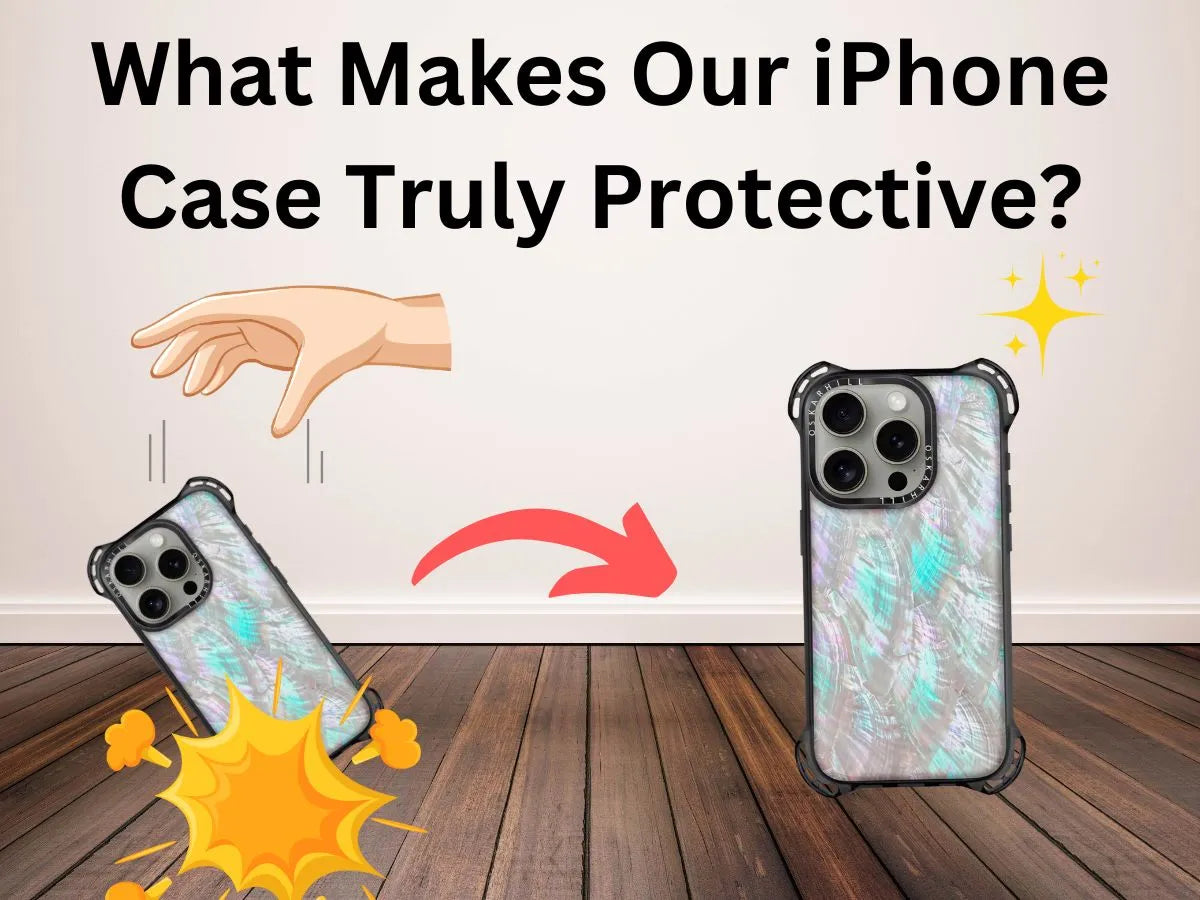
A useful iPhone case should fit correctly and let you use your phone comfortably. When comparing designs, look beyond words such as “tough” or “protective” and check the details shown for the particular product.
Start with a secure, model-specific fit
Confirm the full iPhone model name before ordering. Check the case version, camera opening and control positions. A photograph of the design on another phone is not a substitute for selecting the correct model.
Look at coverage and access
- Camera surround: check the shape and coverage around the camera area.
- Screen edge: review the side views to understand how the case meets the front of the phone.
- Buttons and ports: make sure the design accommodates the controls and charging cable you use.
- Closure and attachments: for wallets or straps, inspect how they close or connect.
Raised edges and textured surfaces are design details to compare. Their appearance alone does not establish a tested drop height, and no case can promise that a phone will never be damaged.
Consider your everyday handling
A plain back, a wallet cover and a decorated case can feel different in a hand, pocket or bag. Think about what you normally carry. Card storage may be helpful for one person, while another prefers to keep their wallet separate. Any strap should be attached as intended and checked regularly.
Keep charging compatibility separate
A case can have a magnetic closure without supporting MagSafe charging. Read the individual product’s compatibility statement and check the accessory you plan to use. Our MagSafe case collection groups listings that identify this feature.
Browse iPhone cases and compare their documented features. For more on test claims, read how to assess drop-protection claims.
Before choosing a case, use our iPhone case fit and buying guide to check your exact model, practical features and included accessories.